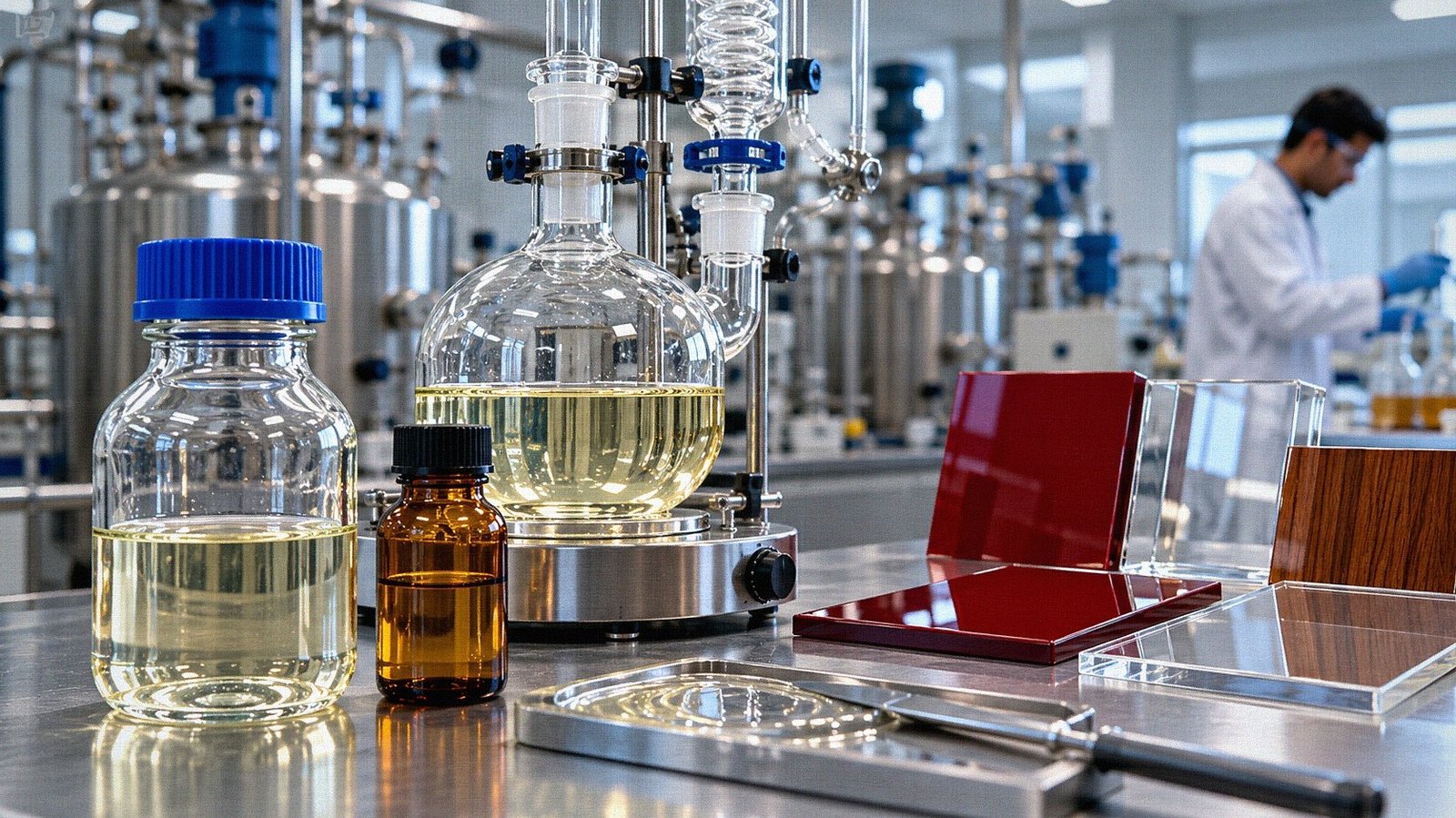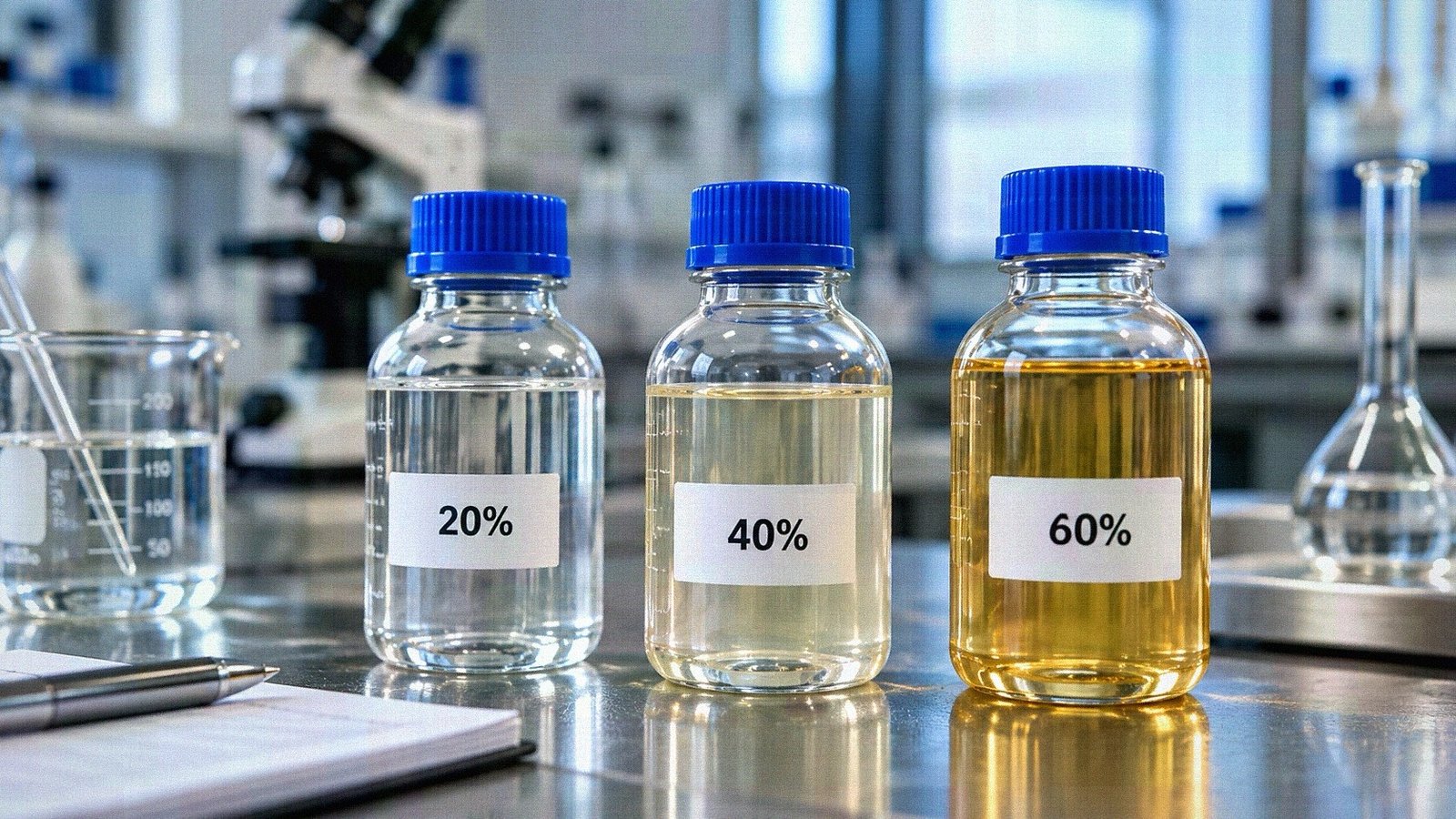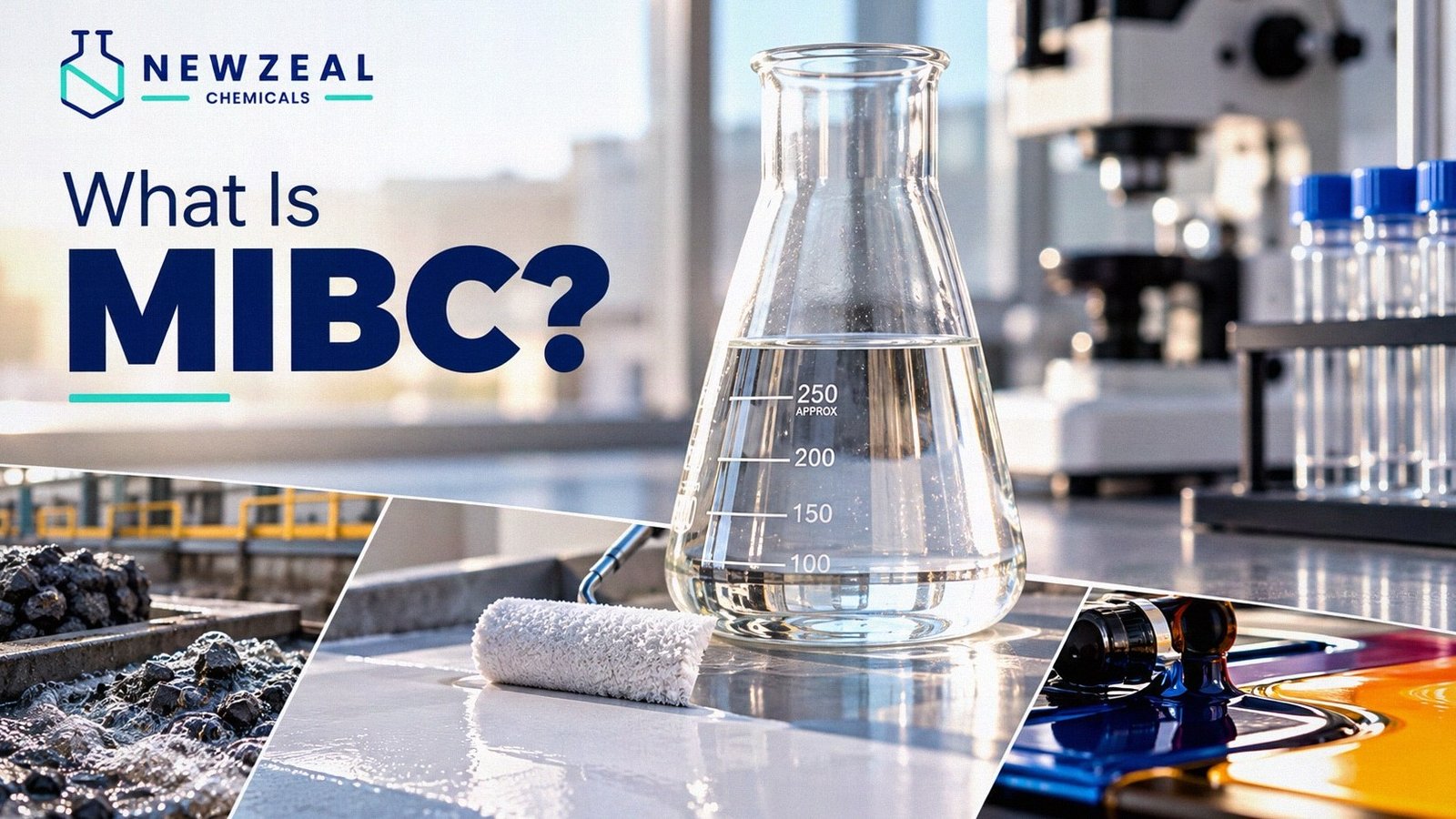

Flotation facilities process thousands of tons of ore per day; yet they rely on adding a chemical in grams per ton. The chemical is methyl isobutyl carbinol (MIBC) for short, and it has been purchased by almost all flotation facility operators. When problems arise with MIBC, everyone wants to know what it is. So, what is MIBC, and why does its family tree matter to buyers? To adequately answer that question we need to provide a family tree for MIBC that many buyers of this product have never heard of.
What Is MIBC (Methyl Isobutyl Carbinol)?
Methyl isobutyl carbinol is the common name given to 4-methyl-2-pentanol with CAS No. 108-11-2. It is a secondary alcohol containing six carbons and is a clear colorless liquid with a boiling point approximately 132°C and a density of about 0.81 g/cm³. Evaporation of MIBC is slow. The flash point for MIBC is approximately 41°C, placing it squarely in the category of flammable liquids. Hexylene glycol, on the other hand, has a significantly higher flash point. Please consider these values to be approximate as variations occur due to grade and test methods used.
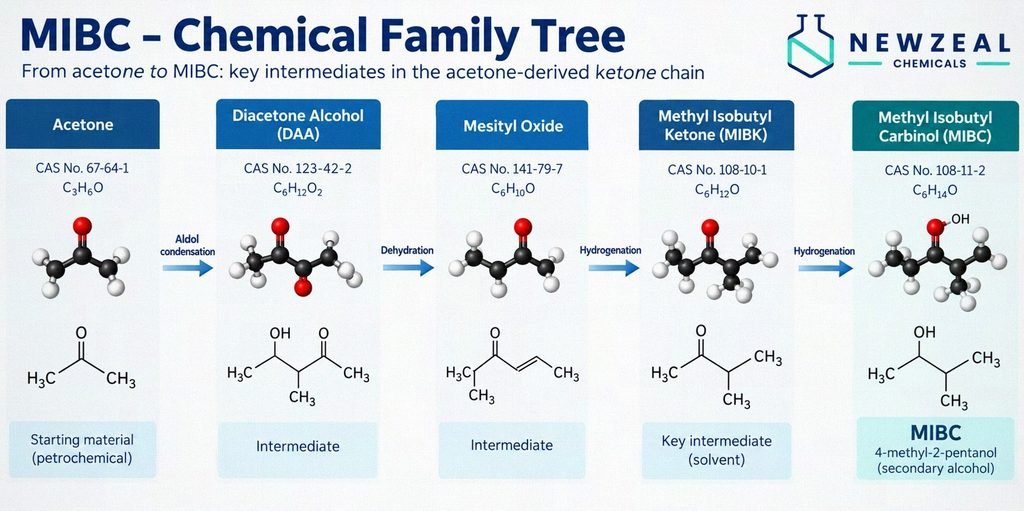
This is the aspect of MIBC that surprises most people. MIBC does not exist independently. It exists as part of the ketone chain. The ketone chain begins with acetone, progresses through diacetone alcohol and mesityl oxide, and finally arrives at MIBK. MIBC is generally created by hydrogenation of those intermediate compounds.
Therefore, the frother in a copper circuit shares a family tree with solvent-based coatings. Coating chemists purchase thousands of tons of those compounds each year. This familial relationship affects how MIBC is created, how contaminants appear within MIBC, and the security of its availability.
Additionally, MIBC only partially dissolves in water.
Although this appears to be a flaw, it is precisely what a frother requires. A molecule that is equally comfortable in both water and air will position itself at the interface of a bubble rather than disappearing entirely into the liquid phase. Chemistry is rarely so orderly; therefore, you can anticipate some exceptions to occur.
However, this principle provides sufficient guidance for choosing a suitable frother.
One final practical point regarding terminology. Manufacturers refer to this chemical as MIBC, methyl isobutyl carbinol, 4-methyl-2-pentanol or methyl amyl alcohol. The CAS number for this compound, 108-11-2, resolves all arguments. Ensure that your quote, certificate of analysis and safety data sheets carry this same CAS number. A buyer who compares documents based solely on nomenclature may find themselves comparing dissimilar products. Verify that each document references the same CAS number.
Grades: What Actually Differs
Suppliers typically provide similar headlines for grades of MIBC: GC purity, water by Karl Fischer titration, acidity, color, density and distillation range. These numbers are relevant and you should inquire about them.
Nevertheless, they do not present the entire picture when considering MIBC as a frother. A frother is purchased for its performance characteristics rather than for its analytical properties.
Two lots of MIBC with identical purity levels may contain varying levels of impurities. Residual ketones, other alcohols and heavier byproducts depend on the synthesis method employed and on how effectively the distillation process was conducted. Operators frequently state that a specific lot exhibits different behavior in the cell despite possessing identical analytical data for the primary constituents. Impurity profiles are one area where further investigation could prove beneficial.Consequently, request the distillation range and a listing of identified impurities rather than solely a purity value.
Water content warrants separate attention. For flotation applications, a modest quantity of water rarely poses significant issues. However, for synthetic applications where MIBC may undergo reaction with moisture-sensitive substances, the maximum allowable limit for water may be substantially lower. Prioritize defining your intended application prior to establishing your specifications and inquire about which analytical technique determined each value.
Color warrants brief discussion. Typically, MIBC is a water-white liquid; however, yellow discoloration may signify oxidation or contamination. In general terms, discoloration rarely impacts the effectiveness of MIBC as a frother. Nevertheless, discoloration affects the appearance of clear coatings and synthetic products. Therefore, establish a color limit if your ultimate product’s aesthetics are dependent upon it. Additionally, an unexpected color indicated on a certificate of analysis represents an invaluable early warning system; therefore, pay close attention to it.
Lastly, retain a sample from every shipment received. When changes occur weeks after a particular plant observation has occurred, retention of these samples enables you to compare chemical compositions rather than rely on memory. Consider a concentrator that transitions from one shipment to another at approximately mid-month. Both shipments possess identical analytical data as indicated on their respective certificates of analysis; however, the froth appears coarser during the second shift following transition from one shipment to another. As a consequence, the operator increases the dosage of frother. Seven days later, someone analyzes retained samples from both shipments and discovers differing levels of heavy byproducts. Without those retained samples, the team would undoubtedly continue to blame the ore.
Where MIBC Gets Used
Mineral flotation is undoubtedly the best-known application for MIBC. In this role, MIBC serves as a frother. Flotation facilities introduce small quantities of MIBC into their systems in order to produce stable froths that transport valuable minerals to the surface. This role represents one focus of this series; therefore, it justifies its existence as operators concern themselves with aspects that most buyers would never consider.
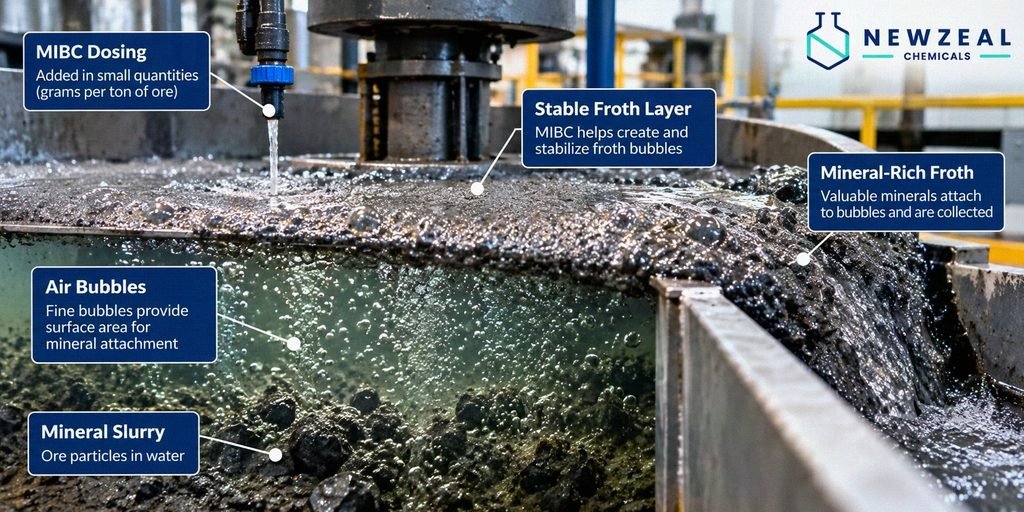
Outside of mineral flotation, MIBC functions as a slow solvent for coatings and lacquers due to its relatively high boiling point and slow rate of evaporation.
Additionally, MIBC is utilized in lubricant additive chemistry and general chemical synthesis as an alcoholic building block. In numerous instances where MIBC is utilized in these capacities, it is consumed as part of another compound; therefore, buyers are more concerned with reactive impurities than with solvent power.
Now for the honest limitation. As a general-purpose solvent, MIBC seldom outperforms other alternatives; therefore, I would not recommend it simply because it is readily available. MIBC justifies its utilization where its unique combination of alcoholic character, partial solubility in water and moderate volatility are essential.
Nevertheless, MIBC’s significance extends beyond its volume. Each usage exists in different sectors of industry; consequently, demand for MIBC emanates simultaneously from mining operations, coating manufacturers, lubricant producers and chemical manufacturers. This diversity provides one rationale for why a prudent buyer views supply security as a specification requirement. Inquire about where the product originates from, how it is stored and how quickly your supplier can replace a failed lot.
To discuss grades and packaging options for your application, submit your requirements for quantity and destination to NewZeal Chemicals. Know more about MIBC.