
If you’ve ever received a quote for a chemical with a name longer than the price line and a number after it that no one in the room can explain, this one is for you. The purchasing manager asks whether the 40% polyDADMAC on this year’s quote is the same as the 20% you purchased last year, and the honest answer is “same chemistry, different drum.” If you want to be able to read any polyDADMAC datasheet without guessing, there are 4 polyDADMAC properties to understand: what the molecule does, what the number on the label actually means, what molecular weight adds that the label leaves out, and how to test a grade before you purchase a full drum.
1. PolyDADMAC Properties: A Polymer With a Charge That Never Changes
PolyDADMAC stands for polydiallyldimethylammonium chloride, CAS 26062-79-3. It consists of one repeating unit, DADMAC, and each unit contains a quaternary ammonium group. That is the entire story. A quaternary ammonium maintains its positive charge regardless of the pH level; therefore, unlike many other treatment chemicals, polyDADMAC does not lose effectiveness when your water becomes either too acidic or too alkaline. The chemistry is old, by the way. It was first synthesized and studied in 1957 by Professor George Butler at the University of Florida, and it has been used in treatment facilities ever since. That fixed charge is the most important of all polyDADMAC properties.
Most things you wish to remove from water carry a negative charge: clay, silt, colloidal organic matter, many types of dyes, and the pitch produced in a paper mill. These particles repel each other, which is why they remain suspended in water rather than settling. PolyDADMAC neutralizes this charge so that the particles stop repelling each other and can be grouped together into flocs. In treatment terminology, this process is referred to as coagulation (the step prior to flocculation), and it is why polyDADMAC is primarily referred to as a coagulant and only secondarily as a flocculant (in a loose sense).
2. The number on the label is not what you think
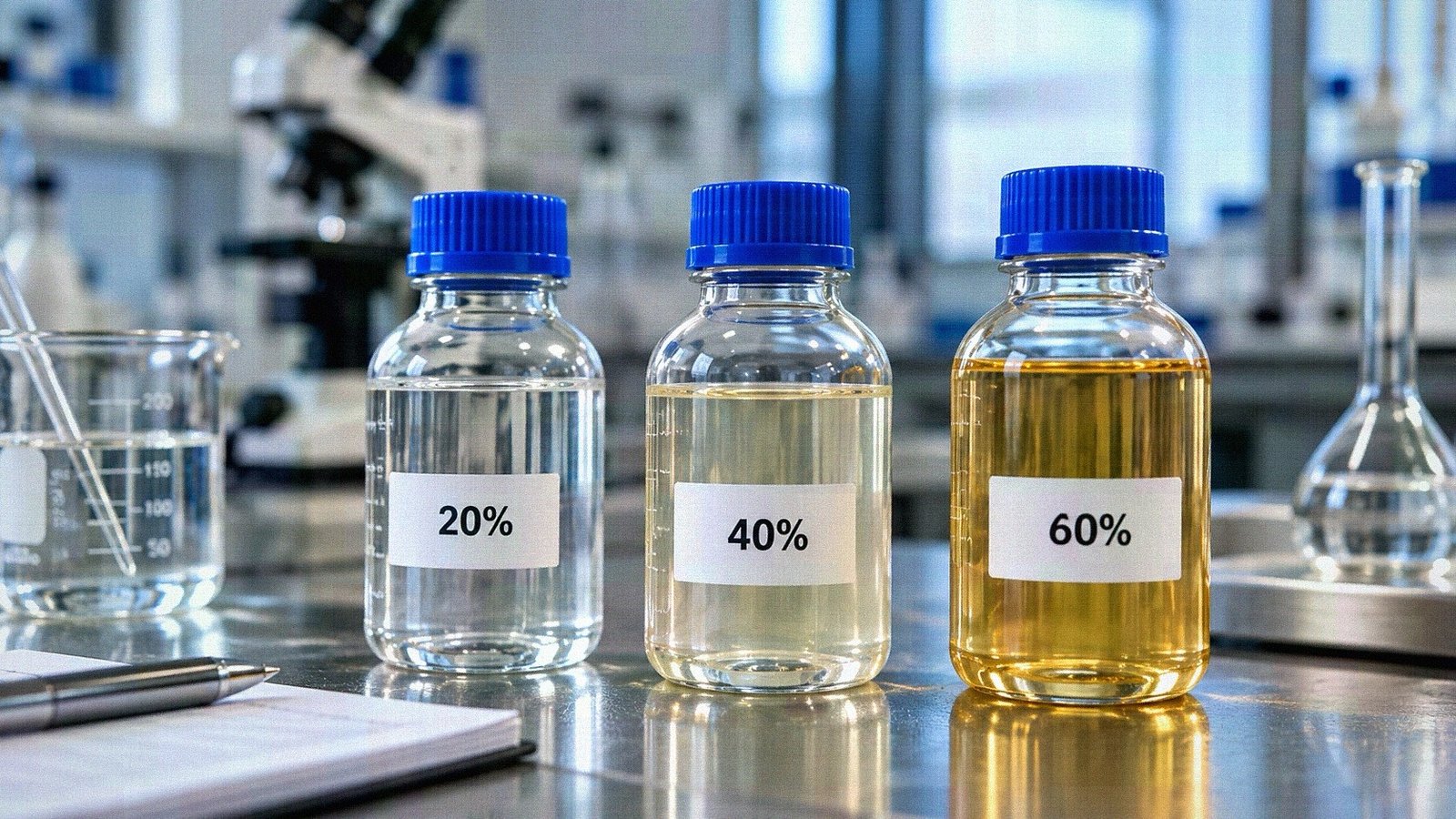
NewZeal provides polyDADMAC as 20%, 40% and 60% liquid grades. This number represents solids content, i.e., how much of the drum is polymer and how much is water. It is not strength in the same way that a 60% acid is strong, and it is certainly not a quality score. At the same molecular weight, a 40% drum contains twice as much polymer as a 20% drum; thus, you use less of it. That is all the math indicates. Solids content is the polyDADMAC property buyers misread most often.

3. The number that is not on the label: molecular weight
The number that rarely appears prominently is molecular weight. Published sources state that it ranges from tens of thousands to approximately one million, depending on the grade. Viscosity increases significantly with molecular weight; therefore, as a general rule, highly concentrated liquids are typically lower molecular weight grades, while highly diluted liquids are typically higher molecular weight grades.
Consequently, two drums labeled “polyDADMAC” may exhibit significantly different properties, and the percentage alone will not indicate which one you are holding. The table below summarises the key polyDADMAC properties:
| Property | What to know |
|---|---|
| CAS number | 26062-79-3 |
| Charge | Strongly cationic (quaternary ammonium), independent of pH |
| Usual form | Aqueous solution |
| Solids content | Published sources indicate approximately 10 to 50%; NewZeal offers 20, 40 and 60% |
| Molecular weight | Grade dependent, from above 10,000 up to approximately 1 million |
| Water solubility | Fully soluble |
| Main treatment role | Coagulant via charge neutralization; fixative in papermaking |
Consider these values as ranges. Each manufacturer’s grade falls within these ranges; therefore, obtain the final values from the supplier’s TDS and COA.
Now, before we move on to the last point, there is a catch. You can comprehend charge, solids and molecular weight perfectly and still purchase the incorrect drum because a datasheet describes the polymer and only your water determines if it is appropriate.
4. Test it in a jar before you purchase a drum
Collect a sample of your own water, place several beakers in a row and add two or three candidate grades in equal increments. Mix rapidly, then slowly, then allow the flocs to settle and observe three aspects: the size of the floc, how rapidly it settles and how clear the water is above it. Within the range you will identify a optimal dose. Beyond it you will observe something that surprises many individuals: the water will worsen. Excess cationic polymer will reverse the charge on the particles and they will stabilize once again. More is not always better, and the jar is where you learn this lesson economically.
Then compare grades based on cost per cubic meter treated, not price per kilogram. A more expensive drum that requires one-third of the dose may ultimately be the more economical program.
Where it earns its place
PolyDADMAC clarifies industrial and municipal water, removes color from dye effluent when the dyes are of the correct type and controls dissolved and colloidal “trash” in paper mills. Each of these applications has its own set of potential problems and its own optimal grade; therefore, each will have its own guide in this series.
The honest limits
Knowing polyDADMAC properties is only half the job. It will not precipitate dissolved phosphate in the same manner as metal salts do; it works better on certain types of dyes than others; and it must be a grade approved for drinking water if the treated water is destined for a tap. European standard EN 1408 addresses this application, and your own regulatory body may designate others. To discuss which of the three concentrations is best suited for your process, submit your application, water type and destination to NewZeal Chemicals via the inquiry form.